UK Dropshipping Suppliers:
The Definitive 2026 Guide
 I ★★★★★ 4.7 on
UK-based · Founded 2018
 No Credit Card Required
Free Trial Available
Cancel Anytime
UK-Based Support
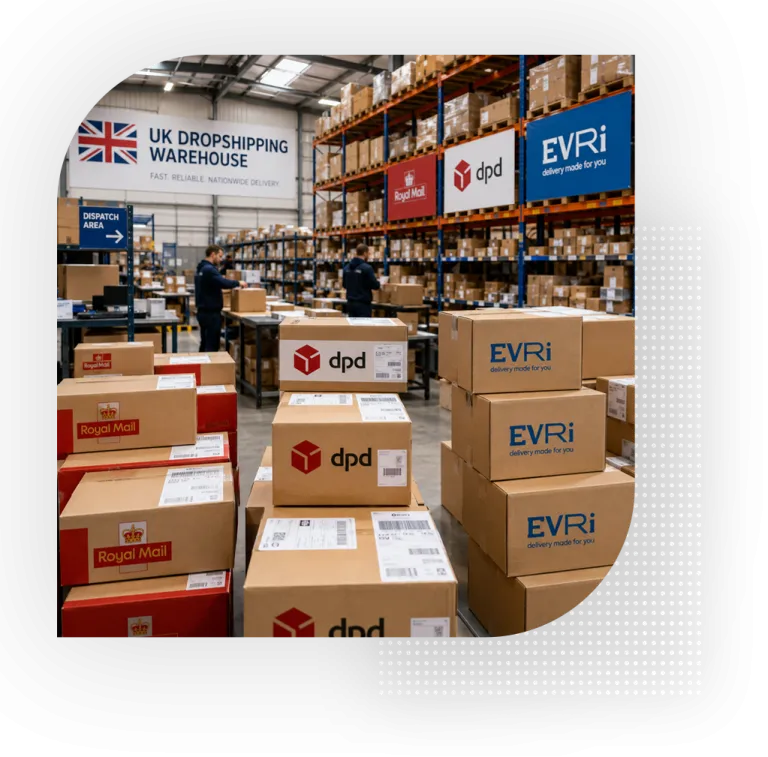
UK-based fulfilment makes 2-5 day delivery the default – not the exception.
What is a UK dropshipping supplier?
A UK dropshipping supplier is a wholesaler, manufacturer, brand or distributor based in the United Kingdom that allows online retailers to sell products without purchasing or storing inventory upfront. When a customer places an order through your Shopify store, eBay account, Amazon marketplace or ecommerce website, the supplier picks, packs and ships the product directly to the customer on your behalf.
This business model allows retailers to launch and grow an ecommerce business without investing in stock, warehousing or fulfilment operations. Instead of managing inventory yourself, you focus on product selection, marketing and customer acquisition while the supplier handles storage and delivery.
While the principle is the same as overseas dropshipping, supplier location has a major impact on the customer experience. Working with UK-based suppliers can improve delivery speeds, simplify returns management, reduce customs and VAT complexity, and provide greater confidence in product quality and compliance. For many UK retailers, these operational advantages outweigh the lower product costs often associated with overseas sourcing.
New to UK dropshipping?
If you’re setting up your first dropshipping business, our step-by-step guide explains everything from choosing a niche and registering your business to finding suppliers and making your first sale.
Types of sourcing channels in the UK
When searching for UK dropshipping suppliers, retailers typically source products through three main channels. Each approach offers different levels of control, scalability and operational complexity:
Which sourcing channel is best?
If you're launching a new ecommerce business, a dropshipping platform with verified UK suppliers is often the easiest way to get started. It provides supplier verification, inventory synchronisation and order automation, helping reduce manual work while scaling your business.
How UK dropshipping works, step by step
The UK dropshipping process is straightforward and follows the same core principles as any other dropshipping model. The difference lies in supplier location, delivery expectations and operational efficiency.
- A customer places an order through your Shopify store, eBay account, Amazon marketplace, WooCommerce website or another ecommerce channel.
- The order is automatically or manually forwarded to your chosen UK supplier.
- The supplier picks, packs and dispatches the product directly to your customer using domestic delivery services such as Royal Mail, Evri, DPD or other UK courier networks.
- Tracking information is shared with you and, where supported, synchronised back to your ecommerce platform or marketplace.
- You retain the difference between your retail selling price and the supplier’s trade cost as your profit margin.
Because products are already stored within the UK, domestic orders can often be fulfilled more quickly and with fewer logistical complexities than international fulfilment models. This can help improve delivery performance, simplify returns management and create a smoother customer experience for UK-based shoppers.
💡 Source legally and sell confidently in the UK
Many UK retailers choose domestic suppliers to improve delivery speeds, simplify returns and deliver a better customer experience. Avasam connects retailers with verified suppliers and automates inventory updates, order processing and tracking synchronisation.
UK suppliers vs China: speed, quality, VAT and returns
One of the most common sourcing decisions ecommerce retailers face is whether to work with UK-based suppliers or source products from overseas suppliers, particularly those based in China.
Both sourcing models can be successful, and each offers distinct advantages depending on your business objectives, customer expectations and product category. UK suppliers are often chosen for faster delivery, simpler returns and easier regulatory compliance, while overseas suppliers can provide access to larger product catalogues and lower product costs.
The comparison below highlights some of the key differences retailers should consider before choosing a sourcing strategy.

| Factor | UK dropshipping suppliers | China / overseas suppliers |
|---|---|---|
| Delivery time | Typically 2–5 working days | Typically 10–30 days |
| Product cost | Higher trade price | Often lower unit cost |
| Returns | Simple, domestic address, lower postage | More complex international returns |
| VAT & customs | Domestic VAT only; no import step for UK orders | Import VAT, IOSS/customs complexity |
| Quality control | Easier to inspect; vetting is realistic | Additional due diligence may be required |
| Customer trust | “Dispatched from the UK” lifts conversion | Delivery expectations vary by shipping method |
| Branding | Often supports branded invoices/packaging | Inconsistent; Branding capabilities vary by supplier |
The trade-off is straightforward. Overseas sourcing can provide access to lower product costs and wider product ranges, while UK sourcing often offers advantages in delivery speed, returns management, compliance and customer experience.
For retailers focused on building a long-term ecommerce brand within the UK market, domestic suppliers can provide operational advantages that support customer satisfaction and repeat purchases. However, many successful businesses combine both UK and international suppliers to balance product availability, margins and delivery expectations.
For a deeper breakdown, see our guide to UK dropshipping vs China dropshipping.
How to Find Reliable UK Dropshipping Suppliers
Finding a UK supplier is easy. Finding a reliable one is the hard part, and it is where most new dropshipping businesses succeed or fail. Use the checklist below before you list a single product. The best UK dropshipping suppliers should offer reliable stock availability, fast dispatch, accurate product data and clear returns policies.
Where to find UK suppliers
- Dropshipping platforms that pre-vet UK suppliers and automate ordering – the lowest-risk route for beginners.
- UK trade directories and wholesale marketplaces.
- Trade shows such as Spring Fair and Autumn Fair at the NEC Birmingham, where you can meet suppliers in person.
- Direct approaches to UK manufacturers and brands that operate a trade or wholesale programme.
If you’re still setting up your business, read our Start a Dropshipping Business in the UK guide before choosing suppliers.
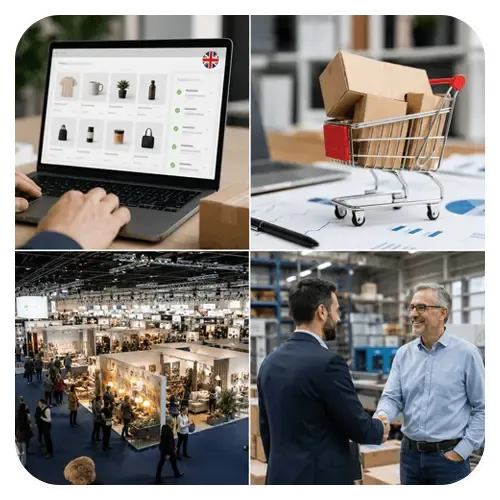
The nine-point vetting checklist
For sellers who would rather not vet suppliers one by one, platforms that verify suppliers during onboarding remove most of this work. We cover the trade-offs in our guide to how to source UK suppliers – including options that don’t involve Avasam.
UK dropshipping suppliers for beginners: what to look for
For beginners, the best UK dropshipping suppliers are verified, ship quickly, have accurate stock data and a clear returns policy - because as a new seller, reliability protects you from the mistakes that sink most first stores. UK suppliers are especially beginner-friendly: 2-5 day domestic delivery.
If you're just starting out, prioritise these five things in a supplier:
- Verification – a supplier that’s been checked (ideally by the platform you use) removes most of the vetting work.
- Fast, reliable dispatch – slow delivery causes the negative reviews and disputes that hurt new stores most.
- Accurate stock sync – prevents overselling items that are actually out of stock.
- Clear returns policy – you’re responsible to the customer, so you need a supplier that handles returns fairly.
- No minimum order – lets you test products without committing to bulk stock.
The lowest-risk route for a beginner is a platform that pre-vets UK suppliers and automates the order flow, so you can focus on choosing products and marketing rather than managing supplier relationships by hand. New to the whole process? Start with our step-by-step guide on how to start dropshipping in the UK.
Source from verified UK suppliers — free to start
No stock to buy. No card required. Set up in minutes.
Already have an account? Log in
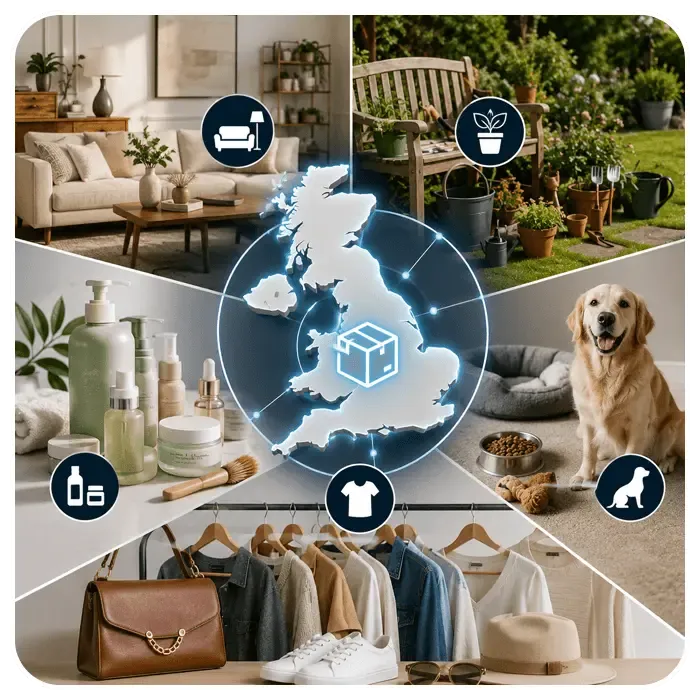
Best UK dropshipping supplier categories
Some categories are far better suited to UK sourcing than others, usually because the products are bulky, fragile, regulated, or because customers expect fast delivery. The strongest UK dropshipping categories in 2026 include:
- Home & living – furniture, décor and homeware, where bulky items make overseas shipping impractical. See home products.
- Garden & outdoor – seasonal demand rewards fast UK dispatch. See garden products.
- Health & beauty – a regulated category where UK supply chains reduce compliance risk. See health & beauty products.
- Pet supplies – repeat-purchase products with strong UK demand. See pet supplies.
- Fashion & lifestyle – clothing, accessories and lifestyle products with year-round demand and quick UK fulfilment. See fashion and lifestyle products.
Once you know your category, the next decision is your niche. Our guide to the best UK dropshipping niches for 2026 breaks down profitability and competition by sub-category.
Regional UK supplier guides
If you want suppliers close to you – useful for collections, inspections or local partnerships – see our regional directories for London, Manchester, Birmingham, and Leeds.
Browse Popular UK Supplier Categories
VAT, EORI and Brexit: the compliance basics
The following is general information, not tax advice. Rules change and your circumstances are unique — confirm with a qualified accountant before acting.
Do I need to register for VAT?
In 2026 the UK VAT registration threshold is £90,000 of taxable turnover in any rolling 12-month period. If your turnover crosses that figure, you must register with HMRC within 30 days. The threshold has been £90,000 since 1 April 2024 and applies the same way to sole traders, partnerships and limited companies across England, Scotland, Wales and Northern Ireland. The deregistration threshold sits slightly lower, at £88,000. Some sellers register voluntarily before reaching the threshold so they can reclaim VAT on start-up costs. For the full picture, read our UK VAT guide for dropshippers.
What is an EORI number and do I need one?
An EORI (Economic Operators Registration and Identification) number is used for moving goods into or out of the UK. If you only sell goods that a UK supplier ships to UK customers, you may not need one — but if you import stock yourself or sell across borders, you almost certainly will. Our EORI guide explains exactly when it applies.
How has Brexit changed UK dropshipping?
Brexit reshaped VAT, customs and cross-border selling for UK businesses. Selling B2C across EU borders now interacts with the EU’s €10,000 distance-selling threshold and the IOSS/OSS schemes. The single biggest advantage of using UK suppliers is that, for UK-to-UK orders, you sidestep import VAT and customs declarations entirely. We unpack the detail in our Brexit & UK dropshipping guide and IOSS & OSS explainer.
Are there free UK dropshipping suppliers?
Yes – you can start with UK dropshipping suppliers for free in the sense that you don’t buy or hold any stock upfront: you only pay a supplier for a product once a customer has bought it from you. What “free” means in practice depends on three things: whether the supplier charges to work with them, whether there’s a minimum order, and whether the platform you use to connect to suppliers has a fee.
- No upfront stock cost – this is the core appeal of dropshipping. You pay the supplier’s trade price only after you’ve made the sale, so there’s no inventory to fund.
- No minimum order (MOQ) – many UK dropshipping suppliers let you sell single units with no minimum order, which is what makes the model accessible to new sellers.
- Platform fees – if you source through a dropshipping platform, it may charge a subscription. Most, including Avasam, offer a free plan so you can browse the product catalog and explore the platform.
So while genuinely “100% free forever” is rare once you factor in platform and selling-channel costs, you can absolutely start lean: no stock, no minimum order, and a free trial to test suppliers before committing. Model your numbers with a profit-margin calculator before you launch so you know your margin after all fees.
How to evaluate a UK dropshipping supplier
Selecting the right supplier is one of the most important decisions an ecommerce retailer makes. Product quality, delivery reliability, customer satisfaction and long-term profitability are all heavily influenced by supplier performance. Many new retailers focus almost entirely on product pricing, but experienced sellers know that operational reliability often has a far greater impact on business growth than a small difference in product cost.
The scorecard below is the same framework used internally to assess suppliers joining the Avasam marketplace. Score each criterion out of 5, multiply by the weighting, and total. We treat 80%+ as a clear pass, 65–79% as a conditional pass requiring a closer look, and anything below 65% as a fail.
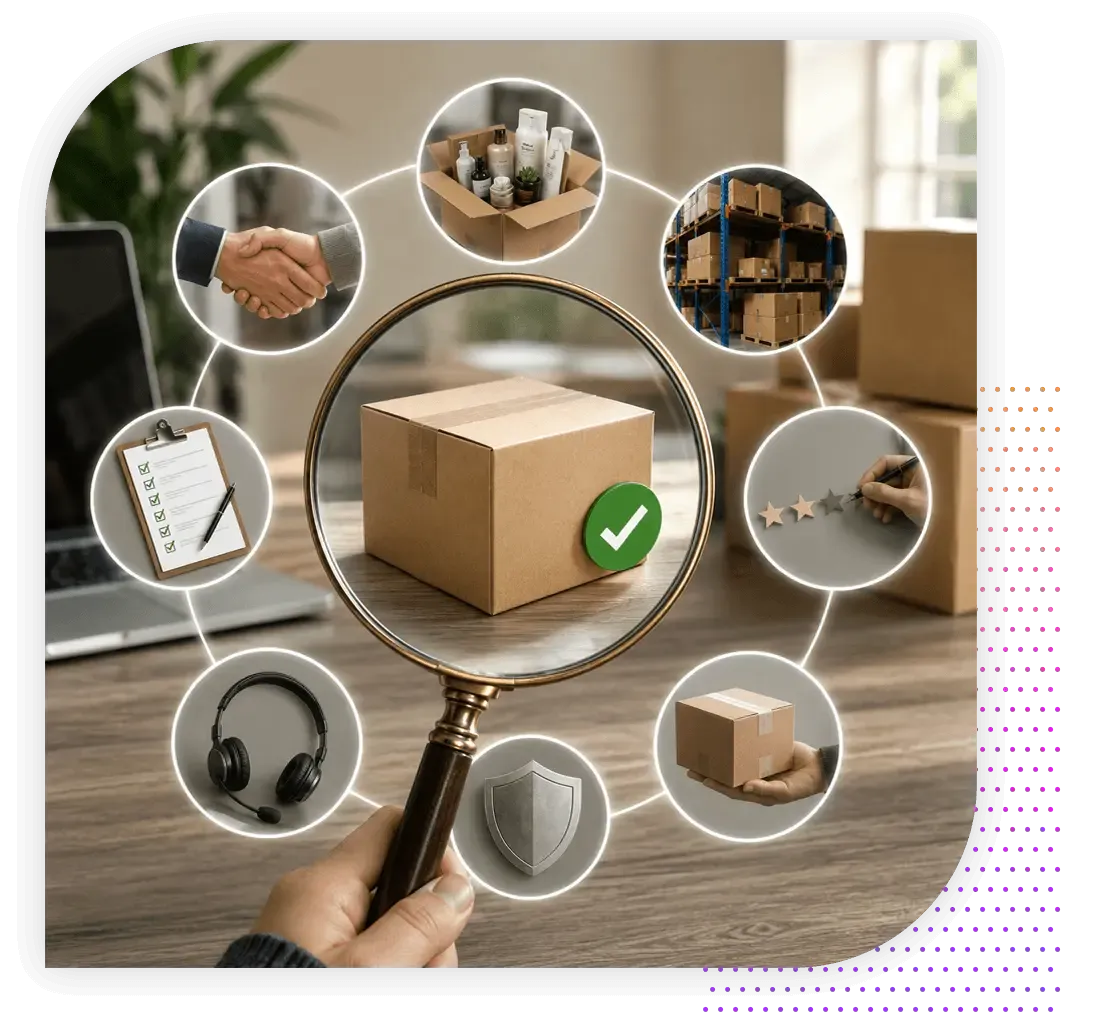
Supplier evaluation scorecard
| Criterion | Weighting | What “5/5” looks like |
|---|---|---|
| Product quality | 25% | Sample orders arrive undamaged, accurate to description, and consistent across multiple SKUs. |
| Delivery performance | 20% | Same-day dispatch on orders before cut-off; tracked delivery in 2–3 working days; sub-1% lost or late. |
| Inventory accuracy | 15% | Stock feed updates every 30 minutes or better; documented oversell rate under 1%. |
| Returns handling | 15% | Written returns policy, faulty returns refunded inclusive of outbound shipping, sub-7-day resolution. |
| Technology capabilities | 15% | Provides clean product feed (CSV/XML/API), supports automated order injection, exposes tracking. |
| Communication | 10% | Named account contact, response within one business day, proactive on stock or delivery issues. |
The weightings reflect what actually causes refunds, marketplace metric damage and customer churn. Quality and delivery dominate because they are the two factors a customer notices on every single order. Communication scores lower not because it is unimportant, but because a supplier scoring 5/5 on the other five criteria rarely needs to communicate — the system just works.
How long should evaluation take?
For a single supplier, a meaningful evaluation needs at least two weeks: enough time to place sample orders, observe the inventory feed during a stock fluctuation, and run a returns trial. Skipping this step is the single most common reason new UK dropshipping businesses lose their early customers.

Managing multiple suppliers as you scale
Most UK dropshipping businesses begin with a single supplier — a sensible way to learn the workflow without compounding risk. As product ranges expand, retailers typically work with five, ten, even twenty suppliers across different categories and fulfilment locations. At that point, the bottleneck shifts from ``finding suppliers`` to ``managing suppliers well.`` Strong supplier processes become a real competitive advantage.
What good supplier management looks like
- Performance monitoring: Track on-time dispatch rate, late delivery rate, cancellation rate and refund rate per supplier each month. Anything trending the wrong way over two consecutive months warrants a conversation.
- Inventory accuracy reviews: Sample 20–30 SKUs per supplier monthly. Compare reported stock against actual fulfilment to catch suppliers with stale feeds.
- Standardised communication: One channel per supplier (email or portal), one named contact, one cadence for performance reviews. Ad-hoc WhatsApp messages don’t scale.
- Documented onboarding: When you add a new supplier, capture cut-off times, carriers used, return address, contact, and integration method in a single document. Future-you will thank present-you.
- Tiered fallbacks: For high-volume SKUs, line up a secondary supplier so a single supplier outage doesn’t take down your bestseller.
The trade-off is straightforward. Overseas sourcing can provide access to lower product costs and wider product ranges, while UK sourcing often offers advantages in delivery speed, returns management, compliance and customer experience.
For retailers focused on building a long-term ecommerce brand within the UK market, domestic suppliers can provide operational advantages that support customer satisfaction and repeat purchases. However, many successful businesses combine both UK and international suppliers to balance product availability, margins and delivery expectations.
For a deeper breakdown, see our guide to UK dropshipping vs China dropshipping.
Industry insight:
Scaling retailers consistently report that supplier management becomes harder than customer acquisition somewhere between £30k and £100k monthly revenue. The retailers who handle that transition smoothly are the ones who built the monitoring habits early — before they were strictly necessary.
Why inventory synchronisation matters
Inventory accuracy is the single most important operational metric in dropshipping. If you sell a product that your supplier doesn't actually have, you have an oversell — and the consequences cascade through your entire business.
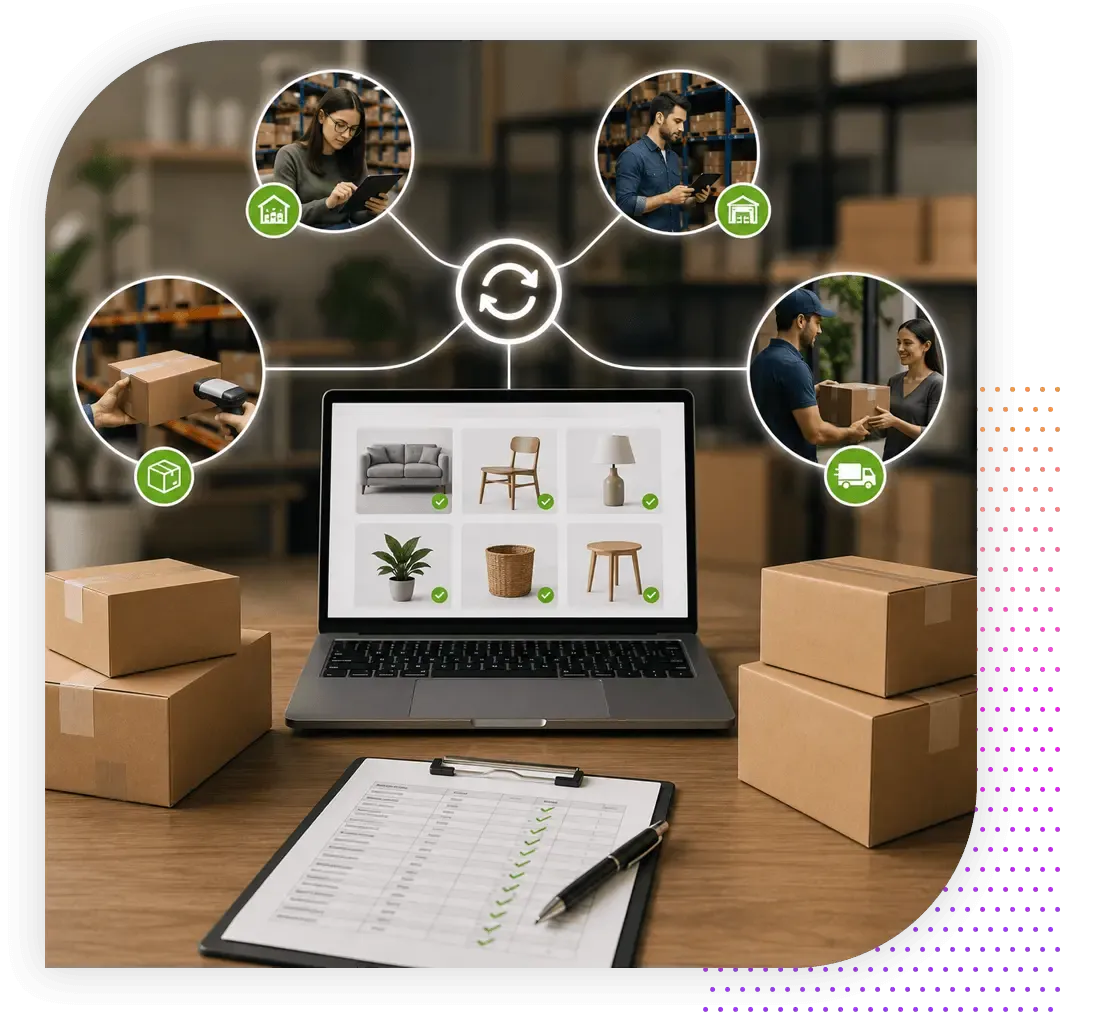
What an oversell actually costs
The obvious cost is the cancellation: a refunded order, a frustrated customer, a one-star review. The less obvious costs are larger:
- Marketplace metric damage. eBay and Amazon both penalise sellers for cancellations and late shipments. A run of oversells can move you below threshold on Top Rated Seller status, removing search visibility and the right to charge a fast-delivery premium.
- Search ranking effects. Cancellations contribute to Order Defect Rate on Amazon. A high ODR can suspend your selling privileges entirely.
- Customer acquisition cost waste. Every oversold order is a paid acquisition you’ve thrown away — the ad spend, the promotion, the email campaign that drove the sale was all spent for nothing.
- Lifetime value collapse. A customer who experiences a cancellation in their first order is roughly 5× less likely to buy again than one whose first order went smoothly.
What “good” synchronisation looks like
A serious dropshipping platform should update inventory at least every 30 minutes and ideally in near real-time via webhooks. For high-velocity SKUs, the platform should automatically buffer stock (e.g., show “out of stock” when supplier reports fewer than three units) to absorb any lag between supplier system and channel. If your current supplier or platform updates inventory less frequently than every two hours, you have an oversell problem waiting to happen — you just may not have noticed yet.
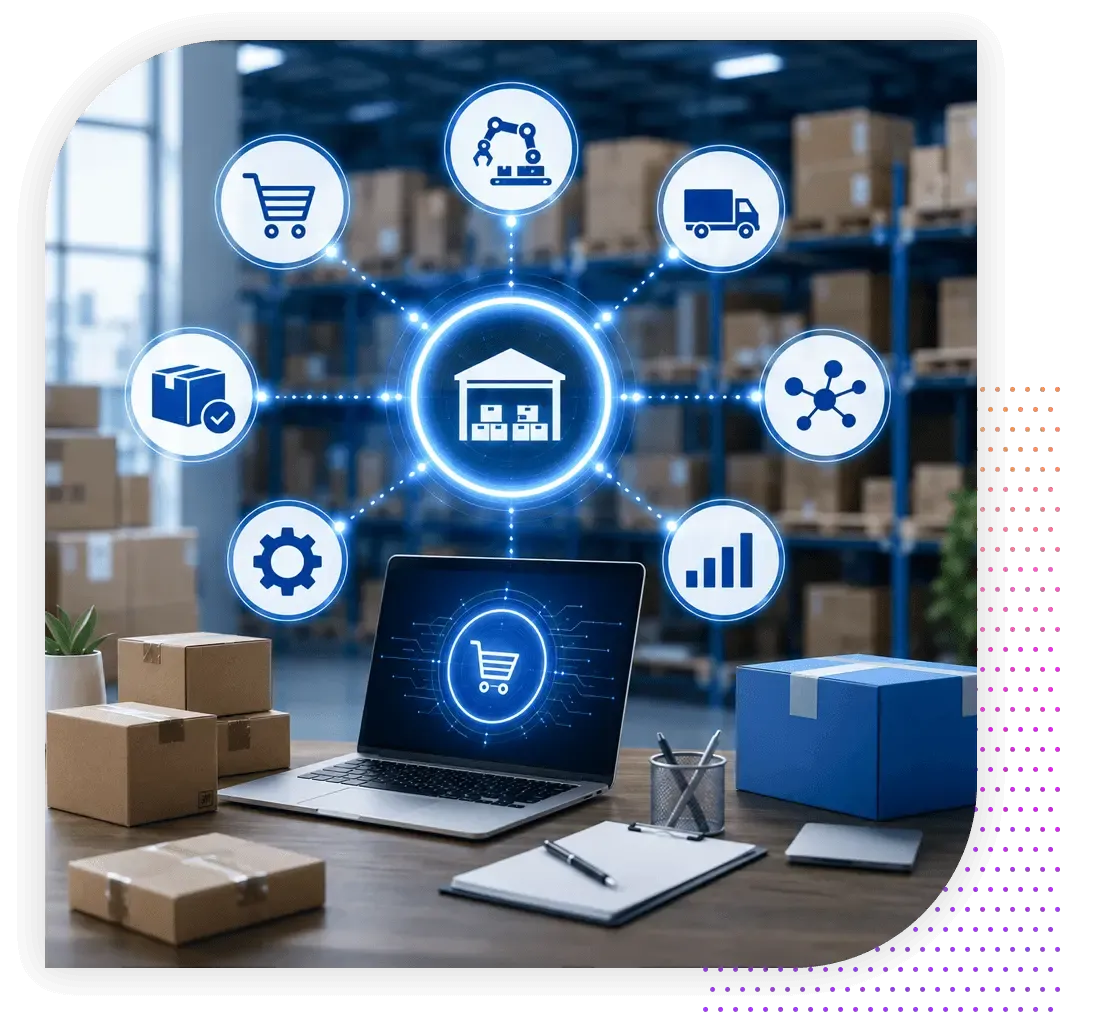
Supplier automation requirements for scaling retailers
Manual dropshipping works up to a point. Past 50–100 orders per day, the operational load of placing orders with suppliers by hand becomes a full-time job — one you didn't sign up for. Automation isn't optional once you're scaling; it's the difference between a hobby and a business.
The automation stack that matters
- Inventory automation: Stock levels sync from supplier to all sales channels without manual updates.
- Order routing automation: Sales channel order is automatically converted into a supplier purchase order, with the correct shipping address and notes.
- Payment automation: Supplier is paid automatically when an order is placed, so you never have to remember to top up a wallet or process a payment.
- Tracking synchronisation: Once the supplier dispatches, tracking number flows back to the sales channel and triggers the channel’s shipping notification.
- Pricing updates: When supplier trade prices change, your retail prices update by your defined rule (fixed margin, percentage, or absolute).
- Product data management: New supplier products and image/description updates flow through to your listings without re-uploading.
Each one of these saves a small amount of time per order, but the compound effect is dramatic. At 200 orders a day, manual order placement alone would consume four to six hours. Automated, the same work runs in the background while you focus on marketing and merchandising — the activities that actually grow the business.
UK supplier trends and the future of dropshipping
The UK supplier landscape continues to evolve as customer expectations rise and technology advances. The trends below are shaping where the industry is heading in 2026 and beyond.
1. Same-day and next-day expectations
Prime has reset what UK consumers consider acceptable. The 2–5 working day window that was excellent five years ago is now the floor, not the ceiling. Suppliers investing in same-day dispatch and regional micro-fulfilment will increasingly win the bestseller categories.
2. AI-assisted sourcing and content
Product description generation, image enhancement, and even niche-discovery tooling are now common in serious dropshipping platforms. The advantage shifts to retailers who use AI to ship more, better listings — not to those who use it to ship more identical listings, which Google and the marketplaces are increasingly downranking.
3. Marketplace and channel proliferation
TikTok Shop is the standout new channel of the last 24 months in the UK, joining Shopify, eBay, Amazon, WooCommerce and Etsy as a meaningful destination for ecommerce. Suppliers that integrate cleanly with multi-channel platforms (rather than locking themselves to a single store) will see materially more order volume.
4. Sustainability and provenance
UK consumers increasingly expect to know where products come from and how they’re packaged. Suppliers offering recyclable packaging, lower-carbon courier options, and clear country-of-origin labelling are easier to sell against premium competitors.
5. Compliance tightening
Product safety regulations, extended producer responsibility schemes, and digital product passport requirements are all expanding their scope. Suppliers that handle compliance documentation properly – and platforms that surface that documentation to sellers – will be significantly easier to work with than those that don’t.
How Avasam connects you to vetted UK suppliers
Avasam is a UK-based dropshipping automation platform that brings verified UK suppliers and online sellers together in one place. Every supplier goes through a 10-step onboarding and verification process before their products become available, so you are sourcing from partners who have already been checked — removing most of the vetting work described above.
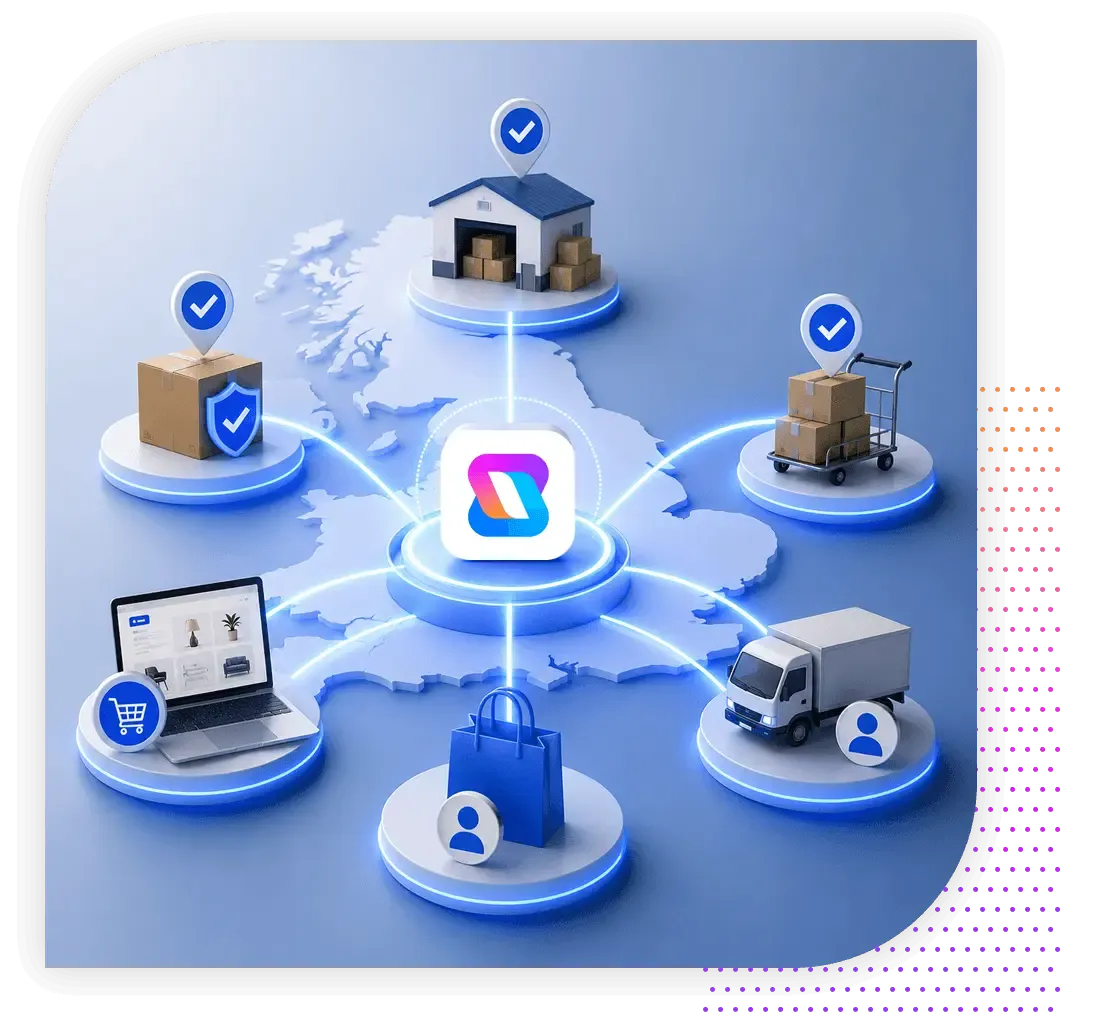
- Verified UK suppliers: Scale your store with verified domestic distribution networks across home, garden, electricals, health & beauty, fashion, pet and more.
- Automated order flow: Orders, payments and tracking codes pass automatically between your store, the supplier and the end customer.
- 30-minute inventory syncing: Real-time stock updates safeguard your seller score by preventing out-of-stock ordering.
- Multi-channel integrations: Native setups with Shopify, eBay, Amazon, WooCommerce and TikTok Shop. See our specialised UK Shopify integration.
Compare how Avasam performs against other leading platforms in our best dropshipping platform UK comparison guide. - Free plan to start: Browse the supplier catalogue and platform features without a card, then upgrade when you’re ready to sell.
If you’d rather see how we compare to alternative platforms first, our head-to-head guides are honest about where another platform might suit you better: Avasam vs AutoDS, Avasam vs Spocket, and Avasam vs DSers.

Frequently asked questions
What are the best UK dropshipping suppliers?
Are UK dropshipping suppliers more expensive than China?
Many of these additional overseas costs come from customs paperwork, import VAT and cross-border compliance obligations explained in our Brexit UK Dropshipping Guide.
Do I need to be VAT registered to dropship in the UK?
How fast do UK dropshipping suppliers deliver?
What is the best platform to find UK dropshipping suppliers?
The best platform depends on your business requirements. Many UK retailers look for platforms that provide verified UK suppliers, automated inventory updates, order processing, marketplace integrations and reliable customer support to simplify day-to-day ecommerce operations.
What products are most profitable to dropship in the UK?
How long does it take to start a UK dropshipping business?
You can start a UK dropshipping business in as little as one day if you choose a reliable platform and verified UK suppliers. The exact timeline depends on tasks such as setting up your online store, selecting products, configuring payment methods and shipping options, and publishing your listings. Many retailers can begin selling within a few days once these steps are completed.
Can beginners start a UK dropshipping business without prior experience?
Can I dropship UK products on Shopify, eBay and Amazon?
How do I check if a UK supplier is legitimate?
Can I dropship from the UK without holding stock?
How much does it cost to start UK dropshipping?
Can I scale a UK dropshipping business with automation?
Yes. Automation helps ecommerce businesses manage product imports, inventory updates, supplier orders and order tracking more efficiently. As order volumes increase, automation reduces manual tasks and helps businesses scale more effectively.
How do I choose the right UK dropshipping supplier?
When selecting a UK dropshipping supplier, compare delivery speed, product quality, supplier reputation, stock availability, return policies, platform integrations and customer support. Choosing verified suppliers helps reduce business risks and improves customer satisfaction.
What are the benefits of using verified UK dropshipping suppliers?
Why do UK ecommerce businesses prefer UK dropshipping suppliers over overseas suppliers?
Many UK ecommerce businesses prefer UK dropshipping suppliers because they typically offer faster delivery, simplified returns, improved customer experience, reduced customs complexity and easier communication compared with overseas sourcing.